ラベル ふくおかの名宝 の投稿を表示しています。 すべての投稿を表示

2020年11月18日水曜日

【Treasures of Fukuoka】No. 14 Armor and Helmets Representing Military Exploits of Kuroda Nagamasa

Kuroda Nagamasa, the first lord of the Fukuoka Clan, is the one who established Fukuoka Castle and the castle town and founded the basis of the present-day Fukuoka city. His armor, helmets, and portrait were jointly designated as important cultural assets of Japan. They are the following four articles. Please have a look.

①銀箔押一の谷形兜・黒糸威五枚胴具足(ぎんぱくおしいちのたになりかぶと・くろいとおどしごまいどうぐそく)


②黒漆塗桃形大水牛脇立兜(こくしつぬりももなりおおすいぎゅうわきだてかぶと)

③黒漆塗桃形大水牛脇立兜(こくしつぬりももなりおおすいぎゅうわきだてかぶと)


④黒田長政像(くろだながまさぞう)


You may find them familiar, that’s no wonder. All of them belong to the Fukuoka City Museum collections and we exhibit them on various occasions. When we call them important cultural property, you would think that the designation was given to all individual items.

The fact is, the main object of the designation is ① 銀箔押一の谷形兜・黒糸威五枚胴具足(ぎんぱくおしいちのたになりかぶと・くろいとおどしごまいどうぐそく), and other objects are basically evidencing the value of the main article. Those supporting articles are equal to the main article in value and should be treated with the same degree of care. In this exhibition, we will exhibit them all in the same showcase to clearly show the connection between those articles.


In this article, I’d like to mainly talk about ①銀箔押一の谷形兜. According to Kuroda Jyuho Kojitsu (Studies on Important Treasures of the Kuroda Family), the helmet of this type was originally a signature item of Fukushima Masanori. The copy of the same helmet was given to Kuroda Nagamasa as a token of Fukushima’s Friendship when they were reunited after fighting. It was during the postwar period after the Korean Invasion. In exchange, Nagamasa gave him a copy of his signature helmet, Oosuigyu Wakidate Kabuto.

The attention-grabbing, uniquely shaped helmet is said to have been modeled after the legendary cliff called Ichino-tani. Legend said that Minamotono Yoshitsune, a famous samurai warrior in the Heian period, galloped down this steep cliff in the GenpeiBattle.


The helmet is often photographed from the front and the image doesn’t convey the steepness of the cliff much. So, I’d like to show you the side view of the helmet today.


It doesn’t even look like a cliff; it is more like a wall! Rock climbers would be able to climb it, but a horse would find it difficult to gallop down. It reminds me of a big wave, depicted in The Great Wave off Kanagawa, one of the Thirty-six Views of Mount Fuji by Katsushika Hokusai.


Aside from that, the helmet is much worth the designation as it symbolizes the military exploits of Nagamasa and the history of the Kuroda family. The helmet was said to have been worn by Nagamasa in the battle of Sekigahara (September 1600) and he is wearing the helmet in his portrait (Fig.4), which is said to have portrayed his appearance in the battle of Sekigahara.

Lastly, I’d like to show you the rare rear view of the helmet. It looks chic, don’t you think?


【Treasures of Fukuoka】No. 13 Sword Mountings for Atakigiri (Important Cultural Property)

 The designation of important cultural property was given to this sword fitting, not to the sword. This is the sheath of Atakigiri, a sword of Kuroda Yoshitaka, the founder of the Fukuoka Clan, who is also known as Kanbyo-e or Josui.


The sheath is entirely wrapped in a sheet of gold, which is embossed in kin arare-ji structure. It’s audaciously designed by coating the bottom part in blue lacquer. The hilt is wrapped with shark skin tied with Fusube leather, and three paulownia crests in red, bronze and gold can be seen through the gap called "menuki." The butt cap called the "kashira" is in a high relief of a surging wave on its gold surface. On its ridge, the same design is inscribed on red bronze.


At its "kurigata", a protrusion on the sheath to keep the sword hanging in the right position, a "shitodome", or hole cover, which is made of pure gold, is attached.


The tip of the scabbard is covered with a silver metal part called the "kuwagata." The handguard is made of iron and in the shape of "kakumimi", a semi-square-like circle with a thick rim. Both sides of the handguard were entirely rasped in such a way that the lines radiate from the center to the rim.


The contrast of gold, silver, vermillion and green are very vivid. The gorgeous design represents the trend of the Momoyama period very well.

Inscription on the Bottom of the Metal Collar


The sword Atakigiri has a two-ply metal collar made of pure gold. On the bottom surface of the metal collar is inscribed “小判明寿”. The inscription confirms the fact that the metal collar was made by Umetada Myoju, a renowned metal smith of the Momoyama period, who is considered to be a pioneer of “新刀” swords, which were made popular in  the 16th to the 17th centuries. We can also assume that the whole scabbard was made under Myoju’s supervision.


“Sword Umetada Myoju, a resident of Nishijin in Yamashiro state” (Important Cultural Property stored at the Kyoto National Museum) is a sword made by Myoju, with the inscription “August. 1598 Don’t give it to anyone.“ Which means, in 1598, the swordsmith was already a priest and called himself “Myoju”. It tells us that the sword must have been made from 1598 to 1604, the year Yoshitaka (Josui) passed away. The sheath of the sword Heshikiri Hasebe (national treasure) is said to have been created imitating the Atakigiri’s sheath.


Both sheaths have refined kin-arare embossed patterns, in which one big nodule surrounded by six smaller nodules are neatly arranged. The Atakigiri’s sheath’s kin-arare motifs were more damaged compared to the Heshikiri Hasebe's, and the thread that covers the hilt is worn out. These traces prove that the sword was actually used in battle.

Close up of the Kin-arare motif of the Atakigiri’s sheath

The knife edge has the inscription “Bishu Osafune Sukesada” on the front side, and on its back, is inscribed “大永二二年八月日”, the date equivalent to August 1524. From these inscriptions, we can assume that the sword was made by Osafune Sukesada, who lived in Suebizen.

The Sword Atakigiri

The name of the sword “Ataki Giri” is taken from Kuroda Yoshitaka’s exploits in the conquest of Shikoku. According to the “Kuroda Family’s History” and the “Kuroda Family’s Treasure and Code of Etiquette”, Yoshitaka sailed to Awaji and took Yura castle, a castle of Atagi Kawachi no kami in present-day Hyogo prefecture. The sword was named Atakigiri (Ataki Slayer) because Yoshitaka used this sword when he killed Ataki Kawachi no kami.


The front side of the tang is inscribed with the swordsmith’s name, with “Atakigiri Wakige Otoshi” in gold inlay. The Atakigiri is a “meibutsu” (treasure sword that was registered as a masterpiece by government) and the Wakige Otoshi is a method of test cutting.


In test cutting, a real human body was used and the sharpness of the sword was determined by which body part the sword cut off. Wakige is a line which connects both armpits and it has a higher degree of difficulty compared to other body parts usually used in test cutting.

【ふくおかの名宝】鑑賞ガイド⑭ 黒田長政の武功を伝える甲冑と兜

 江戸時代,福岡城と城下町福岡を建設し,現在の福岡市の礎を築いた福岡藩初代藩主・黒田長政(くろだながまさ)。彼が使用した甲冑と兜、彼を描いた肖像画は国指定の重要文化財となっています。下の4件です。ご覧ください。

①銀箔押一の谷形兜(ぎんぱくおしいちのたになりかぶと)
黒糸威五枚胴具足(くろいとおどしごまいどうぐそく)

②黒漆塗桃形大水牛脇立兜(こくしつぬりももなりおおすいぎゅうわきだてかぶと)


③黒漆塗桃形大水牛脇立兜(こくしつぬりももなりおおすいぎゅうわきだてかぶと)


④黒田長政像(くろだながまさぞう)

いずれも当館の所蔵で,展覧会で展示する機会が多いため,「見たことがある!」という方もいらっしゃるのではないかと思います。上の甲冑と兜、肖像画はいずれも単独で重要文化財に指定されていると思われるかも知れません。しかし,実は①が重要文化財に指定された際の書類に「附(つけたり)」として②~④が一緒に記されているのです。これは,「附指定(つけたりしてい)」といって指定される本体(ここでは①のこと)の資料的な価値を保証したり根拠を示すものとして一体として指定され,本体と同じように重要文化財として保護の対象となるものです。今回の展覧会では,この「一体」を表現すべく,上記の4件の資料を隣り合わせで展示しています。

今回の記事では,このうち①の銀箔押一の谷形兜について,取り上げてみたいと思います。この兜は,黒田家の重宝を記した「黒田家重宝故実(くろだけじゅうほうこじつ)」によれば,元々は福島正則(ふくしままさのり)が使用していたのですが,朝鮮出兵の後に友情の証(喧嘩した長政と仲直りするため)として写(同じ形をしたスペア)を作って,長政の大水牛脇立兜の写と交換したものと伝えられています。

この兜で目を惹くのは,その特徴的な造形でしょう。この形は,源平合戦の古戦場で,源義経(みなもとのよしつね)が馬に乗って駆け下りた「鵯越の逆落とし(ひよどりごえのさかおとし)」の故事で知られる一の谷(現・神戸市須磨区)の急峻な崖を表現したものと言われています。普段,展示や展覧会の図録などでは,兜を正面からご覧いただくことが多いので,「急峻な崖」感をあまり感じていただけていないかと思い,今回は横から撮影した写真をご覧いただきましょう。

銀箔押一の谷形兜を横から見ると


 …って,もはや「これって崖?」という程の険しさですね。ボルダリングの選手なら登っていけるかも知れませんが,さすがに馬は駆け下りられないと思います。むしろ崖というよりも葛飾北斎(かつしかほくさい)の富嶽三十六景(ふがくさんじゅうろっけい)「神奈川沖浪裏(かながわおきなみうら)」に描かれた大波(あの有名なザッパーンってやつですね)のように見えるのは私だけでしょうか。


とは言え,この兜は,慶長(けいちょう)5年(16009月の関ヶ原合戦で長政が着用したと伝えられ,その出陣の際の姿だという④の肖像画にも描かれており,長政の武功と黒田家の歴史を象徴するものとして,まさに重要文化財に相応しい資料だと言えるのです。

最後に,この兜の後ろ姿も趣深いので,画像を載せておきたいと思います。

銀箔押一の谷形兜を後ろから見ると


(学芸課 髙山)

重要文化財の福岡藩初代藩主黒田長政所用の甲冑と肖像画は、開館30周年記念展「ふくおかの名宝」で公開中です。一の谷形兜を身に着けた長政が描かれている「関ケ原戦陣図屏風」も展示しています。屏風のなかから、長政の雄姿を探してみてください。

 また、2代藩主忠之、6代藩主継高、11代藩主長溥、12代藩主長知の一の谷形兜と甲冑も展示していますので、歴代藩主の一の谷形兜を見比べることができます。


2020年11月16日月曜日

【ふくおかの名宝】観賞ガイド⑬ 拵が重要文化財! 重要文化財・金霰鮫青漆打刀拵

 重要文化財への指定は刀身ではなく、この拵(こしらえ)によるものです。福岡藩祖・黒田孝高(よしたか)(官兵衛(かんびょうえ)・如水(じょすい))の差料安宅切(あたぎぎり)の拵(こしらえ)です。

刀 名物「安宅切」の拵
刀 名物「安宅切」の拵 金霰鮫青漆打刀拵

鞘(さや)は返角(かえりづの)の先から鐺(こじり)まで霰地(きんあられじ)を圧(へ)し出した金の延べ板で巻き込み、腰元は青漆(せいしつ)塗りとする大胆なデザインとなっています。柄(つか)は朱塗りの鮫着せに薫韋巻(ふすべがわまき)を施し、目貫(めぬき)は赤銅金色絵桐紋三双(しゃくどうきんいろえ きりもんさんそう)、頭(かしら)は金無垢(きんむく)、縁(ふち)は赤銅で、ともに波濤(はとう)文様を肉彫りで表現しています。栗形(くりがた)の鵐目(しとどめ)は金無垢、鞘尻(さやじり)の鐺(こじり)は銀製の鍬形(ぎんくわがた)とします。鍔(つば)は鉄地で、やや角張った丸形に周縁をやや厚く肉取りした角耳で、表裏とも全面に日足鑢(ひあしやすり)をかけています。

金・銀・朱・緑のコントラストが鮮やかです。豪華絢爛な意匠は、華やかな桃山時代の気風をよく表しています。

はばき台尻の針書き
鎺(はばき)台尻の針書き

 安宅切には金無垢二重鎺(にじゅうはばき)が付属します。この台尻(だいじり)の差表(さしおもて)側には「小判(こばん) 明寿(みょうじゅ)」の針書きがあり、桃山時代に活躍した金工師で、新刀鍛冶の祖と評される埋忠明寿(うめただみょうじゅ)の作になる鎺だと分かります。したがってこの拵も明寿の監修によって制作されたことが窺えます。明寿には重要文化財・刀 銘 山城国西陣住人埋忠明寿(花押)/慶長三年八月日他江不可渡之(たへこれをわたすべからず)(京都国立博物館蔵)があり、慶長3年(15988月以前に出家して明寿と名乗っていますので、その頃から孝高(如水)が没する慶長9年(1604)以前に制作されたことになります。国宝・圧切長谷部(へしきりはせべ)(福岡市博物館蔵)の拵はこの安宅切の拵を模して作られたものです。ともに金霰地は精密な造りで、大粒の周りに小粒が6粒、規則正しく緻密に配列されていますが、圧切の拵に比べ安宅切は、つぶれた金霰地が散見し、柄巻の汚れとともに使用された痕跡が明瞭です。 

「安宅切」の拵えの金霰地のアップ
「安宅切」の金霰地のアップ

刀身は差表(さしおもて)に作者銘「備州長船祐定(びしゅうおさふねすけさだ)」、差裏に制作年「大永(だいえい)二二年八月日」が切られ、大永4年(15248月、末備前(すえびぜん)の長船祐定(おさふねすけさだ)の作になることが分かります。

金霰鮫青漆打刀拵の刀身 刀「安宅切」
刀 名物「安宅切」

安宅切の名称の由来は、黒田孝高が四国攻めに際して用いた事績にもとづくものです。『黒田家譜』『黒田家重宝故実』によると、淡路(あわじ)に渡海した孝高は、三好氏の一族、安宅河内守(あたぎかわちのかみ)の由良城(ゆらじょう)(兵庫県洲本市)を攻め落とし、この刀で孝高が安宅河内守を討ち取ったことによる命名と伝えています。

 茎(なかご)の差表には作者銘のほかに金象嵌銘「あたき切 脇毛落(わきげおとし)」があります。これは名物としの名称と後世試し切りをした際の截断銘(さいだんめい)を刻んだものです。試し切りでは骨の多少により部位によって難易があり、脇毛は両手を上げた姿勢で両脇を結んだ線を指します。通常行う試し切りの部位より切るのが難しい箇所で、安宅切の切れ味の鋭さを表わしています。

(学芸課 堀本)

重要文化財 金霰鮫青漆打刀拵は、福岡市博物館開館30周年記念展「ふくおかの名宝」で、ともに重要文化財に指定されている刀「安宅切」とあわせて展示中です。また、この拵を模して作られた、国宝 刀「圧切長谷部」の拵も展示していますので、あわせてご覧ください。

2020年11月14日土曜日

【Treasures of Fukuoka】No.0 (Extra Edition) Ms. Gold Seal, National Treasure

(This is a fictional story based on historical fact)


I’m Ms. Gold Seal, made in China. I was born in Rakuyo (The place was then called Gokan) about 2000 years ago. I’m a shorty (2.2 centimeters tall), but everyone adores me for my everlasting beauty that hasn’t changed a bit after 2000 years. My father was a very noble person! The Chinese Emperor Guangwu! It was so regrettable that he passed away* right after I was born.

*Chinese Emperor Guangwu passed away in 57 AC, which is the same year he bestowed the seal to the envoys of Na county.


Before my father died, people from an eastern island came to see him. They suddenly said “May I have your daughter?” My father instantly replied “Please treat her nicely”. It sounded as if it was an arranged marriage. It’s killing me inside to say good bye to my beloved brothers and sisters*. It even brought me to tears. But I was also a bit excited about living in a new place.

*There is a theory suggesting that 広陵王璽(こうりょうおうじ), a gold seal found in Jiangsu Province of China in 1981, was created in the same factory where the gold seal 漢委奴國王 was made.


So, I traveled across the ocean and reached the Na County in Japan. There, I engaged in a duty called Fudei, a very important mission that only I could handle. Fudei is a secretarial job, making sure that the contents of parcels and letters will be kept confidential until it reached China. The good times didn’t last long. I was confined on an island called Shikanoshima for some reason. I was so lonely, and had nothing to do but sleep. I finally woke up after 1700 years; it was already the Edo period. It was when Jinbei, a farmer, found me in a rice field. Because of my distinguished cuteness, I was then offered to the lord of Fukuoka. So I lived in the castle of the Kuroda Family for a while. (The most famous person from the Kuroda family is Mr. Kanbei. Do you know him? I’ve never had a chance see him in person).


After the Edo period, I moved to Tokyo. I was selected as a national treasure in 1931, about 90 years ago from now. (It’s something like a beauty pageant.) I received a passionate job offer from Fukuoka in 1978, about 50 years ago. So, I took a bullet train* to return to Fukuoka. It was astonishingly fast! At first, I was working for the Fukuoka Art Museum, but I was relocated to the Fukuoka City Museum 30 years ago. (Even Mr. Yonekura of the Curatorial section, who is now 60 something years old, looked so cute at the time I came here!) Since then, I have been working as an idol of the museum. I’m so popular that I’m always on duty except on the museum’s official day off which is usually Monday. Everyone looks at me by putting their faces close to the showcase, and I feel a bit embarrassed.

*The Sanyo Shinkansen line extended to Hakata in 1975. We don’t know whether the gold seal was delivered by using the bullet train or not.


If you want to know more about Ms. Gold Seal, please check out the following links:

【Treasures of Fukuoka】No. 4 The Golden Seal “Kan-no Wanonano Kokuo 漢委奴国王” National Treasure

http://fcmuseum.blogspot.com/2020/10/treasures-of-fukuokano-4-golden-seal.html

The Fukuoka City Museum at Home! Open 24/7!

http://fcmuseum.blogspot.com/2020/04/the-fukuoka-city-museum-at-home-open-247.html

【Treasures of Fukuoka】No. 12 Tachi, Long Sword “Nikkou Ichimonji” (National Treasure)

The Siege of Odawara (1590) was a definitive battle that made Hideyoshi Toyotomi the unifier of Japan. Yoshitaka Kuroda, who is also known as Kanbei or Josui, joined this battle with only 300 soldiers to support Hideoshi. It was Yoshitaka who settled the prolonged battle by persuading the Hojo Family to surrender.


The Hojo family was then having a long meeting to determine whether they should counter or surrender while surrounded by enemy forces. The historic meeting originated the phrase “Odawara Hyojo” (a meeting of Odawara), which refers to a meeting that doesn’t reach a conclusion after a long time.


Yoshitaka bravely entered Odawara Castle, in what is now Kanagawa Prefecture, in the defining moment, and successfully convinced Hojo Ujimasa and the Ujinao family to surrender the castle to Hideyoshi. Ujinao gave the sword Nikko-Ichimonji to Yoshitaka as a sign of appreciation for his help in communicating with Hideyoshi. According to the Kuroda Kafu (History of Kuroda family) written by Kaibara Ekiken, the sword was given to Yoshitaka together with the Hojo Shirogai, a trumpet shell, and the Azuma Kagami, a history book.


Long Sword Nikko Ichimonji Hilt, point and entire body


The license given to Kuroda Nagamasa from Hideyoshi on July 10th, right after the surrender of the Hojo family, suggests that the battle successfully ended thanks to Yoshitaka’s wit. Considering that the Siege of Odawara was the final battle before Hideyoshi unified Japan, it is safe to say that it was Yoshitaka who put an end to the warring states period which continued for 100 years. The Nikkou Ichimonji is a commemorative relic, which symbolizes this historical fact.


The Nikko Ichimonji had been enshrined in the Nikko Gongen Shrine, also known as the Nikko Futarasan Shrine in present day Gifu Prefecture, until it was bestowed to Hojo Souun, the first lord of the Hojo family. The sword has become the family treasure of the Hojo Family since then. Although it has no signature of the swordsmiths, it is a masterpiece of the Bizen Fukuoka Ichimonji School, having a clear sword mark called juka choji (multilayered clove shapes).

The wide and relatively thin blade retains the sword form of the old days.


On the front side of the blade, a reflection called utsuri is stretched diagonally from the bottom to the point, and the irregular sword marks called midare utsuri, are spread across on the blade.


On August 8th, 1623, about a month after Kuroda Nagamasa’s death, Kuroda Tadayuki, the second lord of the Kuroda Family, ordered Umetada Myoju, a metalsmith, to make sword fittings of uchigatana style for Nikko Ichimonji.


The order form precisely suggested how the sword should look like as follows:

●The two-ply metal collar should be made of pure Insu gold from China. The top of the collar must have an open work of paulownia crest.

●The Sword hilt washer with a jagged rim and a shitodome, a metal fitting to cover a hole for inserting sageo thread should be also made of kinsu gold.

●Fuchi, the hilt collar should be made of red bronze and must be nimen-fuchi design.

●The sheath should be made of sharkskin dyed in dark blue.

●The Kuroda family will provide a sword hilt, kogai, (a small knife-like object), koduka (a small sword) and a handguard.

●Kurikata and Kaeritsuno, (protrusions of the sheath to make sure the sword is hanged in the right position) and the pommel of the sword should be made of horn.

●Kojiri (a tip of a sheath) should be made of brass and be treated by Kusarakashi-te method.


Also, at the end of the order form, a description was stated “The sword fittings must be made to look exactly like the one for Heshikiri Hasebe”. (It doesn’t refer to the current sword fittings of Heshikiri Hasebe, which was made after the sword fittings of Atakigiri at the end of the Edo period.)


Unfortunately, the sword fittings for both Heshikiri Hasebe and Nikkou Ichimonji were no longer exist, but we can imagine how they looked like by reading those descriptions.


According to “Okura Ohitsugen Oshina Irikumi Cho”, a sword book of the Kuroda family at the end of the Edo period, Nikko-Ichimonji’s sheath was described as “The black sheath with purple sword strap” “Spare sheath in the same design” and it seems that the original sheath was already lost at this point. (The two black sheaths were also lost.)

Sword box grape-and-vine leaf motifs with its lid open


According to the History of Kuroda, the sword of Nikko Ichimonji, placed in this box was given to Nagamasa. The box is audaciously designed in a way that the grapevine is winding around the surface of the box. The  lacquer was also applied to the area which is hidden when the box is closed. This box is a real masterpiece that shows the distinguished skill of the craftsman everywhere.


2020年11月13日金曜日

【ふくおかの名宝】鑑賞ガイド 特別編 コクホー「漢委奴國王」金印ちゃん

 ※このお話は史実を基にしたフィクションです。


国宝 金印を斜め上からみた写真

 私の名前は金印ちゃん。今からだいたい2000年前〈※西暦57年〉、中国(当時は後漢(ゴカン)と呼んでたわ)の都だった洛陽(ラクヨー)で生まれたの。身長2.2cmととっても小柄なんだけど、今でも2000年前から変わらない美しさだとよく褒めてもらえるわ。光武(コウブ)(テー)っていうとってもえらい人が私のお父さんだったんだけど、私が生まれてすぐ死んじゃった〈※註1

※註1 後漢の皇帝、光武帝の崩御は倭の使節への金印贈与と同年の西暦57年のことであった。

 お父さんが亡くなる前、東の島から来たっていう人たちがお父さんに会いに来たの。突然、「娘さんを僕に下さい。」って言うんだけど、お父さんも「娘をよろしく頼む。」って最初からその気だったみたい。何人かいた兄弟〈※註2と別れるのが辛くて涙がでてしまったけれど、新しい土地での生活は新鮮でワクワクしたわ。

※註2 1981年に江蘇省で発見された広陵王璽こうりょうおうじ(金印)が「漢委奴國王」金印と同一工房で製作されたものという説がある。


金印(複製)を使って封印をしている様子

そんなこんなで海を渡って、しばらくは
()(コク)っていうところ中国に送る大事なお手紙に封をするお仕事((フー)(デー)っていうの。私にしかできないのよ!)をしてたんだけど、それからが我慢の日々だったわ。ひょんなことから志賀(シカノシマ)っていう島に閉じ込められたの。とっても寂しかった。っていうか退屈すぎて寝ちゃったわ。

目が覚めたのはそれから1700年後〈※天明41784)年〉よ。そうね、江戸時代っていうのかしら。(ジン)兵衛(ベー)っていうお百姓さんが、田んぼの中にいた私を見つけたの。それから私があまりにもキュートだったから、お城に召し上げられちゃった。それからしばらくはお殿様のお家(黒田家っていうの。官兵衛(カンベー)さまが有名でしょう?私は会ったことないんだけど。)で暮らしたわ。江戸時代が終わってから東京に引っ越したんだけど、今から90年くらい前〈※昭和61931)年〉には国宝(コクホー)に選ばれたのよ(ミス・ジャパンみたいなものね。)。

またしばらくして今から50年前〈※昭和531978)年〉には、「福岡に帰って仕事をしてほしい」って熱烈なオファーがあったものだから、福岡に帰ったの。新幹線〈※註3がとっても早くてびっくりしちゃった。最初は福岡市美術館ってところで働いてたんだけど、30年前〈※平成21990)年〉に福岡市博物館ができるっていうから異動したの(今も学芸課にいるY倉くんなんて、当時若くてかわいかったのよ)。それからずーっと博物館の看板娘として頑張ってるのよ。週に一回の休館日以外はお仕事してるの。みんなすごく顔を近づけて私をみるもんだから、けっこう恥ずかしいのよね・・・。

※註3 山陽新幹線の博多への乗り入れは1975年のこと。 
実際に金印の輸送に新幹線を使ったかどうかは定かではない。

(学芸課 あさおか)


※金印ちゃんについてもっと詳しく知りたい方は↓まで。

福岡市博物館公式ホームページ 金印

福岡市博物館公式ブログ 【ふくおかの名宝】観賞ガイド④ 国宝 金印「漢委奴国王」

2020年11月12日木曜日

【ふくおかの名宝】観賞ガイド⑫ 黒田孝高が戦国時代に終止符を打った証し 北条家から贈られた伝家の宝刀 国宝 太刀  名物「日光一文字」


天正18年(1590)、豊臣秀吉の天下統一の総仕上げとなった小田原攻(おだわらぜ)め。黒田孝高(よしたか)(官兵衛(かんびょうえ)・如水)はわずか3百の手勢で参陣し、秀吉の計略を助けました。秀吉の大軍に囲まれ、抗戦か降伏か、なかなか結論が出ない会議を長く続けたことで、後世「小田原評定(ひょうじょう)」なる語句を生んだ戦いに決着をつけたのが孝高でした。孝高は最終局面で小田原城(神奈川県小田原市)に乗り込み、北条氏政(ほうじょううじまさ)・氏直(うじなお)父子に降伏開城を説得しました。秀吉への仲介のお礼として北条氏直から孝高に贈られたものが日光一文字の太刀です。貝原益軒(かいばらえきけん)著『黒田家譜』によると、北条白貝(しろがい)(福岡市美術館蔵)、『吾妻鏡(あづまかがみ)』(国立公文書館蔵)とともに贈られたとします。

太刀「日光一文字」の全体写真、切っ先のアップ、茎(なかご)のアップ
太刀「日光一文字」 左:茎、中:切先、右:全体

北条氏の降伏直後、秀吉が黒田長政に宛てた710日付けの朱印状では、「今度の首尾、勘解由(孝高)淵底候」と、孝高の才覚により合戦に決着がついたことを知らせています。小田原攻めが全国統一の最後の戦いとなりましたので、孝高が百年ほど続いた戦国時代に終止符を打ったといっても過言ではありません。日光一文字はそのことを象徴する記念碑的遺物といえます。

日光一文字は、もともと日光権現社(栃木県・日光二荒山神社)に奉納されていましたが、後北条家初代の早雲が譲り受け、北条家の伝家の宝刀となったものです。無銘ですが、絢爛たる重花丁子(じゅうかちょうじ)の刃文が冴えわたる備前福岡一文字派の最高傑作です。身幅の広いわりに重ねは薄い出来ですが、当初からの姿を保っています。佩表(はきおもて)には腰元から斜めに映りがすっと伸び、乱れ映りが広がっています。

黒田長政が没して約1ヶ月ほどが経過した元和9年(1623)閏8月8日、2代藩主となった黒田忠之(ただゆき)は埋忠明寿(うめただみょうじゅ)に日光一文字の打刀拵(うちがたなこしらえ)を発注しています。この拵注文によると、鎺(はばき)は印子金(いんすきん)の金無垢二重で上貝には桐紋の透かし、小刻み切羽(せっぱ)・鵐目(しとどめ)は印子金、縁(ふち)は赤銅の二面縁、鞘は藍鮫皮、目貫(めぬき)・笄(こうがい)・小柄(こづか)・鐔(つば)は黒田家より支給、栗形・返り角(かえりづの)・柄頭は角製、鐺(こじり)は真鍮の腐らかし手と、細かい仕様で注文しています。ことに文末で「右は、へし切の刀拵に少もちがい申さざる様に仕らるべく候」と、圧切長谷部(へしきりはせべ)の拵(現状の金霰鮫青漆打刀拵は江戸時代後期に安宅切の拵を模したもので、ここに記されたものと別物です)と同じ仕様で作成しようとしたことが分かります。この圧切と日光一文字の拵は残念ながら現在ともに失われていますが、往時の様子をうかがい知ることができます。江戸時代後期の黒田家の刀剣帳『御蔵御櫃現御品入組帳(おくらおひつげんおしないりくみちょう)』(福岡市博物館蔵)では、日光一文字のサヤを「御鞘黒漆、御下緒紫」「御替鞘右同」としていますので、この頃にはすでに藍鮫鞘は失われているようです。また、黒漆の2本の鞘も失われています。


蓋をあけた状態で展示している 葡萄文蒔絵刀箱
葡萄文蒔絵刀箱

『黒田家重宝故実(くろだけじゅうほうこじつ)』によると、葡萄文蒔絵刀箱(ぶどうもんまきえかたなばこ)に日光一文字の太刀を入れて氏直から贈られたとします。金蒔絵(きんまきえ)で箱の表面に葡萄の蔓(つる)が巻き付くように廻る大胆な構図です。印籠蓋(いんろうぶた)がかぶさる身の立ち上がりにも蒔絵が施されています。 見えない部分にも職人技が行き渡り、見事な作品です。

(学芸課 堀本)

国宝 太刀 名物「日光一文字」は、福岡市博物館開館30周年記念展「ふくおかの名宝」で展示中です。ともに国宝に指定されている葡萄文蒔絵刀箱も展示しています。また、「日光一文字」とともに北条家から贈られた ほら貝「北条白貝」と琵琶「青山」(ともに福岡市美術館蔵)もあわせて展示中です。

2020年11月10日火曜日

【Treasures of Fukuoka】No. 11 Arrow Gou -the oldest Japanese automobile still in drivable condition

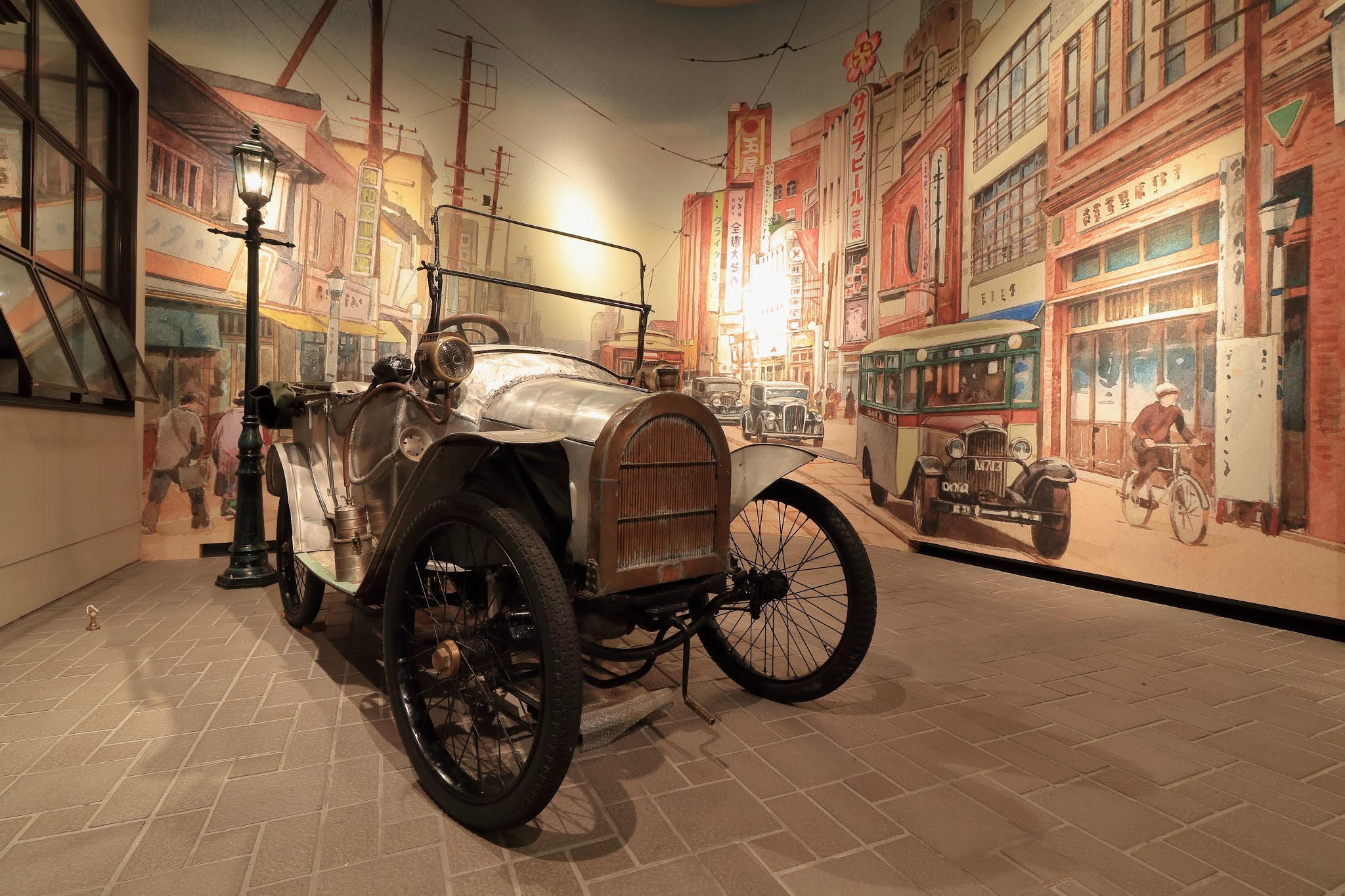
 Arrow Gou (Under the possession of Yano Special Vehicle Co., Ltd.) a vehicle made in Fukuoka is currently displayed at the permanent exhibition room of the Fukuoka City Museum. It was designated as a Mechanical Engineering Heritage in 2009 by The Japan Society of Mechanical Engineers as the oldest Japanese automobile that exists today. The car is twice as small as the size of the present-day vehicles, and the silver body covered by aluminum plates attracts people’s eyes in the exhibition room.

Arrow Gou

The maker of this vehicle was Koichi Yano, a graduate of a Technical school in Fukuoka (Now, Fukuoka Technical High School). Yano had a strong urge to produce an airplane. He made an engine for a model plane by himself. However, Yoshitaro Murakami, a successful businessman in the transportation industry from Fukuoka, suggested that Yano should produce automobiles instead. Murakami recognized the importance of improving the land transport system in Japan and considered that it was essential to making a vehicle that would be suitable for Japan’s road condition. After learning of Murakami’s suggestion, Yano started to research Japanese automobiles. After graduating from the technical school, he started to fully engage in the planning and building of a Japanese automobile. He named the car Arrow Gou after his name 矢野. (“矢” means an arrow in Japanese.).

With the help of Murakami, Yano rented Ironworks to work on the project. Sometimes, he used the facilities of Fukuoka Technical School or Kyushu Imperial University. Most of the car parts are handmade by Yano, created by processing metals. However, he used foreign-made products for some parts like tires, plugs, and magnets.


In August 1915, Yano conducted a test drive of Arrow Gou but it didn’t move due to an engine’s malfunction. Yano heard from a German Engineer of Mercedes‐Benz that the car’s vaporizer might have a problem. This happened in the middle of World War I, while the German engineer was a captive and detained in a camp in Fukuoka city. Yano went to Shanghai taking a sea route to purchase a vaporizer made in England and installed it to Arrow Gou. As a result, the engine of Arrow Gou started to function properly, and the car moved. After that, he constructed the body of the car using the aluminum plate and Japanese papers and completed making Arrow Gou in August 1916. The total cost of building the Arrow Gou was about 1,224 yen, which means that it was a large sum of money spent on making the Arrow Gou considering that the average first salary of the university graduates at that time was only 35 yen.


Arrow Gou's symbol mark is inscribed on the cap of the oil tank.

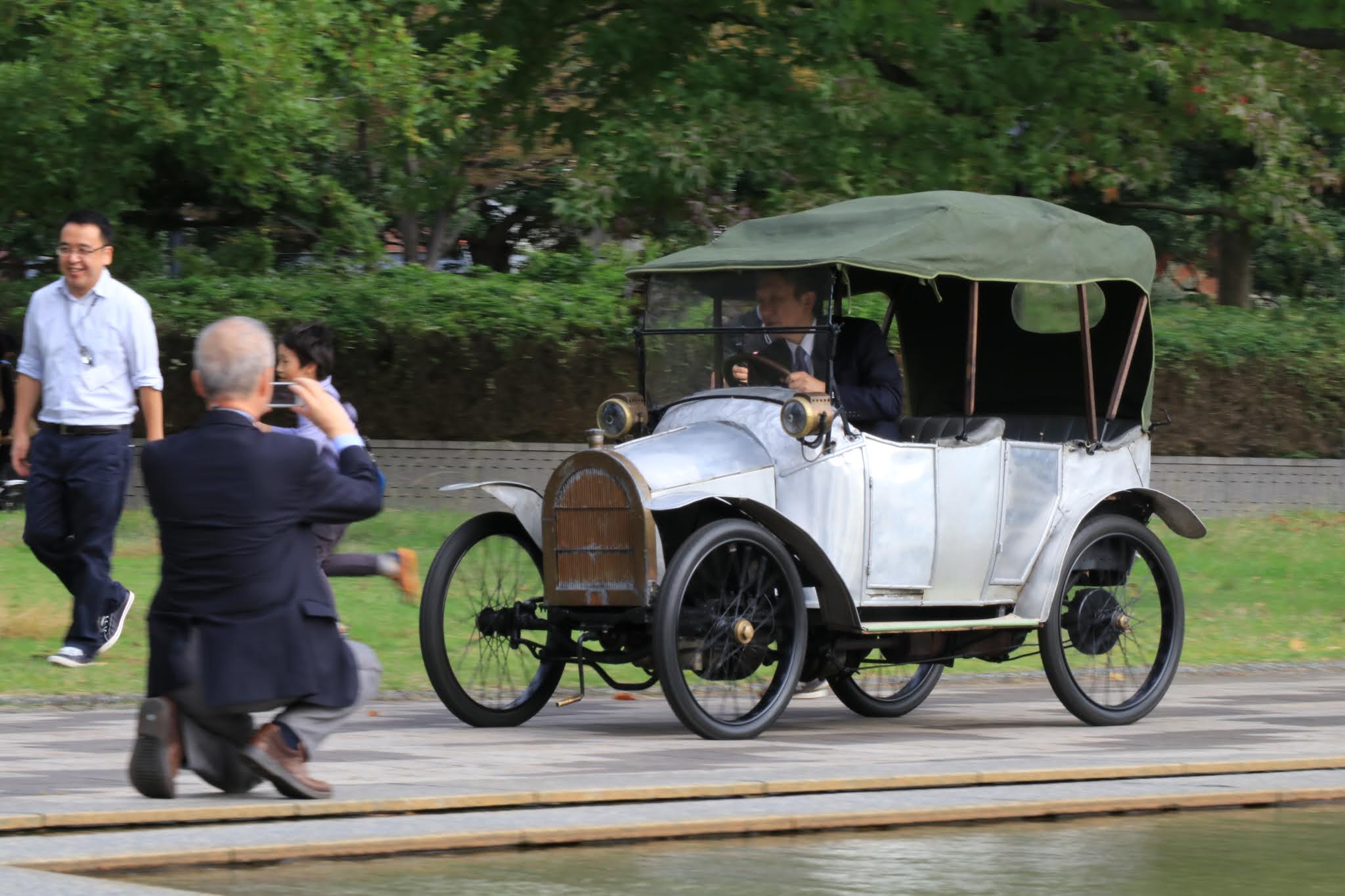
One of the reasons why Arrow Gou is so special is that it is still in a drivable condition. In October 2016, we held an event that commemorates the vehicle’s 100th anniversary, which was titled “Run! Arrow Gou!” In this event, Arrow Gou successfully moved around the pond in front of the museum while making a loud engine noise. About 200 visitors observed this historical moment. While I was watching this car running courageously, I thought about the marvelous manufacturing technique that already existed 100 years ago and people’s passion that enabled Arrow Gou to run after 100 years. I don’t mean to sound too emotional.

Arrow Gou is on display at our permanent exhibition room. It is impossible to drive the vehicle there, but you can still listen to the sound of the engine by watching a video on display. Thank you for taking the time to read this blog. We will be waiting for you at the museum!

This photo was taken at the event "Run! Arrow Gou!" The one driving the vehicle is Mr. Yano, the president of Yano Special Vehicle Co., Ltd. The one taking photos of the vehicle is Fukuoka City Museum's director, Mr. Arima


【ふくおかの名宝】鑑賞ガイド⑪ 福岡で生まれた現存最古の国産自動車─アロー号

 福岡市博物館に寄託されている「アロー号」(株式会社矢野特殊自動車所有)は、福岡で作られた自動車です。現存最古の国産乗用自動車として、日本機械学会によって平成21年(2009)に「機械遺産」に認定されました。アルミ板で覆われた銀色の車体は、現代の自動車よりも二回りほどコンパクトですが、常設展示室でも目を引く存在のひとつです。

常設展示室で展示中の「アロー号」
アロー号(常設展示室)

制作者は、福岡工業学校(現福岡工業高校)出身の矢野倖一。矢野は当初、模型飛行機用のエンジンを自作するほど、飛行機に強い関心を持っていました。そんな矢野に自動車の制作をすすめたのは、運輸業で財を成した福岡の実業家村上義太郎でした。村上は陸上交通の重要性を認識し、日本の道路事情に合う自動車が必要であると考えていました。村上の勧誘を受け、矢野は自動車の研究に乗り出します。そして、学校卒業後の大正2年(1913)から本格的に国産自動車の設計を開始しました。車の名前は自身の名字から「アロー号」としました。

 矢野は、村上の仲介で鉄工所を作業場として借り、時には福岡工業学校や九州帝国大学工科大学(現九州大学工学部)の施設を使用しました。必要な部品は手作業で金属を加工して自作しました。ただし、タイヤやプラグ、マグネットは外国製を使用しています。

 大正4年(19158月、アロー号はテスト走行を行いましたが、エンジンの不調のため動きませんでした。矢野は、ドイツ・ベンツ社の技師から気化器に原因があると聞きます。技師が福岡にいたのは、第一次世界大戦の最中で、ドイツ軍の捕虜が福岡市内の収容所に収容されていたためでした。矢野は海路上海に向かいイギリス製気化器を購入し、アロー号に取り付けました。この結果、エンジンが動くようになりました。その後、アルミ板と和紙で車体を制作し、アロー号は完成しました。大正51916)年8月のことでした。総制作費は約1224円。当時の大卒者の初任給は35円程度、国産自動車の製作にかなりの費用がかかっていたことがわかります。

アロー号のフロントグリル部分のアップ
クラシカルなフロントグリル部分、細いタイヤはリヤカー用を転用した

ガソリンタンクの栓のアップ
エンジン冷却水用とガソリン用の2つのタンクの栓にはアロー(矢)の意匠がある

さて、アロー号の大きな魅力のひとつに、現在でも走行できるという点があります。博物館では、株式会社矢野特殊自動車のご協力のもと、平成28年(201610月にアロー号完成100年を祝して「走る!!アロー号」というイベントを開催しました。200名ほどの観客が見守る中、エンジンを掛けられたアロー号は、少し高めのエンジン音を響かせながら、博物館の前庭の池の周りを無事に周回しました。その時、私は、アロー号の勇姿を近くで見ながら、100年前の確かな技術力やアロー号を今日まで維持してきた方々の熱意に思いを馳せていました。私事はさておき、展示室内では、残念ながらエンジンを掛けることはできませんが、据え付けのモニターでエンジン音を聞くことができます。長文失礼いたしました。ではでは★☆

博物館前庭を走るアロー号
イベントで博物館前庭を走るアロー号。運転手は株式会社矢野特殊自動車の矢野社長。
手前でベストショットを狙う館長の姿も。

(学芸課 野島)


2020年11月9日月曜日

【Treasures of Fukuoka】No. 10 Story of a Hakata Doll

Yoichi Kojima (1886-1970) was a representative Hakata doll maker during the Taisho to Showa period. He was a very famous doll producer who truly deserved to be called a master.

He studied under Saburo Shirouzu when he was 14 years old to acquire a modern doll making technique. He was awarded a silver medal for his work called “Three apprentice geisha” in an international exposition held in France in 1925. Thus, the Hakata doll, which was a traditional local toy, started to be recognized as an artwork thanks to Yoichi’s achievements.

He was loved by many people for his bright and genuine personality. On the other hand, he had many problematic episodes concerning his wastefulness and prodigality. He was a model for the main character of Ashihei Hino’s novel titled Bazoku Geisha.

Yoichi made a Hakata doll named Hatsuawase in 1954. (Following anecdote was cited from “65 years of life spent with Hakata doll -History of Yoichi Kojima-” written by Taneo Harada.)

At that time, when Yoichi created this doll, he was devotedly in love with Hiroko, a Geisha girl from Hakata, and he even tried to run away with her. He spent all the money he earned through doll making for the sake of Hiroko and failed to concentrate on his work.

Yoichi, who was 23 years old then, was an inexperienced doll maker yet, and couldn’t afford to make a payment to release Hiroko from her owner.

Yoichi (23 years old)

Hiroko


It was when Yoichi was told by his master to make a doll for a competitive exhibition to be held in the Fukuoka City Hall. Yoichi decided to make a doll modeled after Hiroko. He took Hiroko to a room on the second floor of a Japanese style restaurant and dedicated himself to doll making for three days. The doll was named 初袷 because it wears stripe Kimono which has a back fabric. The kimono, which is typically worn in Winter is called “袷(Awase)”. He might have chosen this title because the way that the kimono’s outer fabric and inner fabric were sawn together, resembles the couple’s love affair.

Hatsuawase

Yoichi, after completing his masterpiece, hurried to the exhibition venue. Because he was hastily walking, he accidentally broke the doll’s hand by crashing it against a handrail of Nakajima Bridge. He immediately fixed it and brought it to the exhibition.

The doll looked magnificent and most of the judges voted it to be the first placer. However, one of the judges voted the doll to be second place. The judge was Yoichi’s master, Shirouzu. He discovered the trace of amendment in the doll’s hand and decided to give him the second place as a punishment. He wanted Yoichi to feel the consequence of becoming irrational because of a woman and neglected to give more effort in doll making.

Since then, Yoichi started to make dolls with all his might. Two years later, Yoichi and Hiroko got married thanks to the support from others.

“When I came to Hakata, I was by myself. But on my way home, I’m not alone. I’m taking my doll with me.”

【Treasures of Fukuoka】No.9  The Other “Gold”

Why does a Gold Seal, a national treasure found in Shikanoshima Island in Fukuoka, attract attention even until today? Is it because the seal symbolizes power? Do the inscribed characters still contain a lot of mystery? I think the most important factor why the seal grabs our attention, is the fact that it is made of gold, and thus, symbolizes wealth.

As a matter of fact, there is another gold-related cultural asset taken from Shikanoshima Island. It is a bell called Tokinsho (Important cultural property), made in Korea in the 13th century. It is made of gold and stands at 52.8 cm. The aperture is 30.5 cm and weighs about 30 kg, which makes it barely portable by an adult male.

The whole image of the gold-gilded bell (stored at Shikaumi Shrine)


The bell has characteristics typical of Korean bells, with a dragon's head motif, its body wriggling into an S shape, with a tube-like protrusion called the “Yo” in the upper area. There are nipple-like protrusions called “Nyukaku” on the body of the bell, hitting marks called Tsukiza, and Buddha figures that are finely inscribed on all four directions. The design is very elegant, unlike Japanese bells which are much simpler.


The most significant feature of the bell is that it is gold-plated. Gilded bells appeared in the Korean era, and such bells were rarely preserved in the world today. This bell has the best quality among them. Unfortunately, the entire body is covered in green rust, but at a closer look, you can see there are some golden parts on the surface.


Close up of the bell. The golden parts.


Historical records suggest that the bell was already considered as a treasure at the Shikaumi Shrine in the Edo Period and was called the “divine bell”. The same record also describes the bell’s surface as grinded! However, it doesn’t mention when the bell was brought to Shikanoshima Island.


But we know for sure that the Shikaumi Shrine enshrines ancestors of the Azumi family, who engaged in voyage or salt production in the vicinity of Shikanoshima Island since ancient times.


The shrine is one of the most well-known places in the Kyushu area that is sacred to the god of the sea. Perhaps it was for this reason that Shikanoshima Island was selected as a port of call for Japanese envoys, or "kenoto-shi." During the Heian Period, the island belonged to the imperial territory Chokoudo-Ryou. The island also played an important role in importing "karamono", foreign items highly admired by aristocrats.


Records also suggest that both Japanese and Korean diplomatic envoys visited Shikanoshima Island in the Muromachi period. Considering its history, the gilded bell must have been brought by someone who traveled between Kyushu and the continent at some point in the medieval period.


One other notable fact is that bells had been used as a denomination for the dragon, who is a god of the sea. Part of the bells is called “ryuzu”, which is “龍頭” when written in Chinese characters, meaning “dragon head.”  In some cases, bells were dropped into the sea as part of the ritual in praying to the sea god.


Bells were historically used to announce the time in temples, among other things. Gilded bells were, however, considered to be dedicated to the sea god in the Kyushu area, for its glitter and elaborate workmanship. The lofty image reminds us of divine objects we see in Korean dramas.